
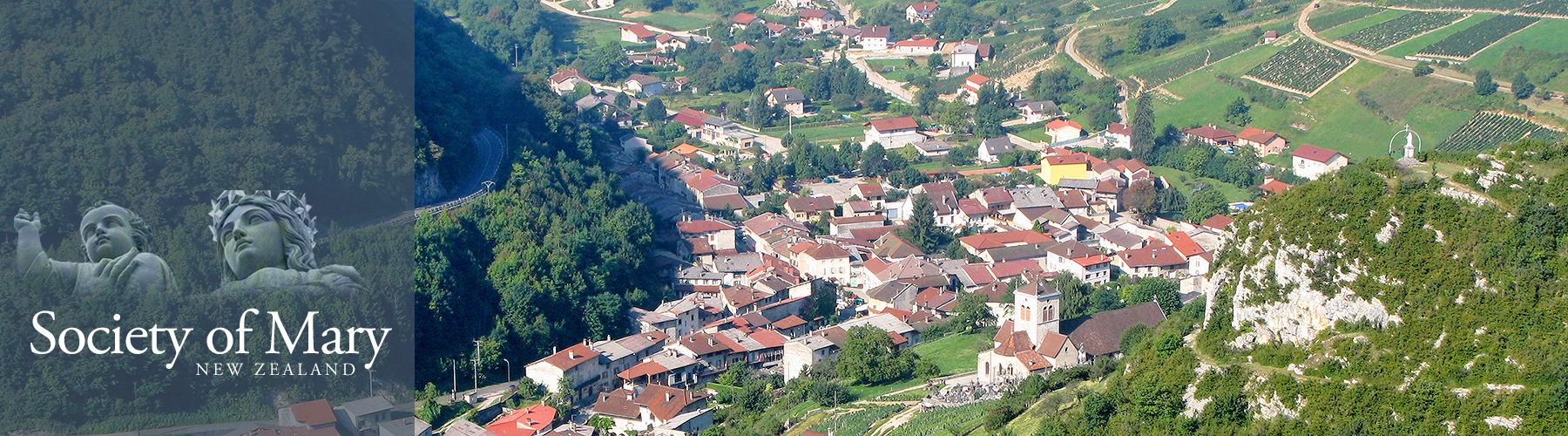
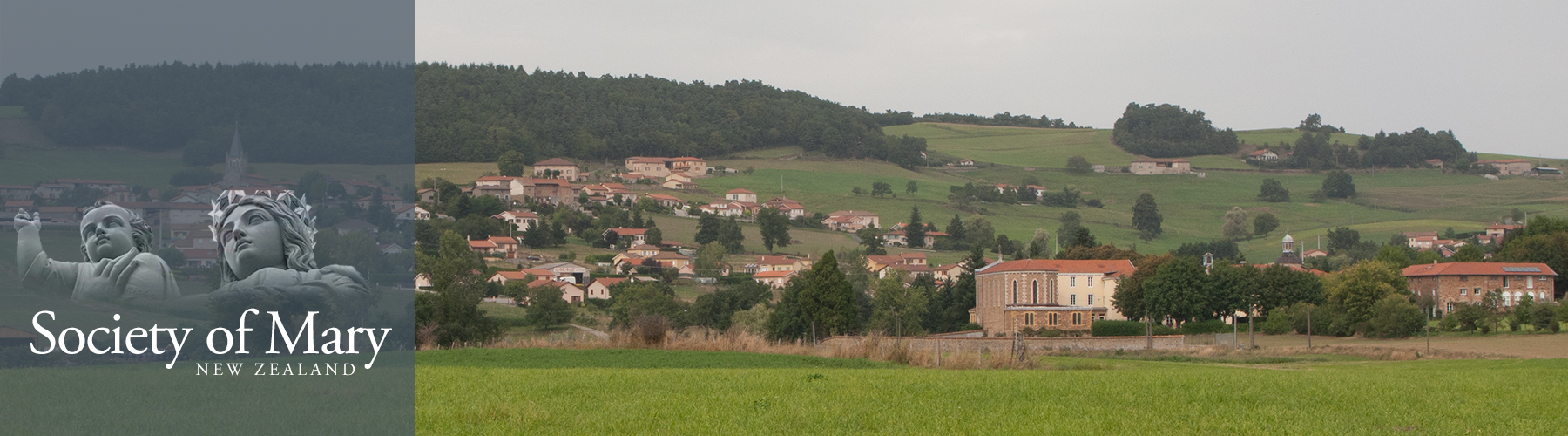
Marist founder, Jean Claude Colin once observed that “St Francis Xavier achieved sanctity in the Indies and St Francis regis in our own country.”
Mission to the “Foreign Lands” while staying at home is a real challenge that has echoes Jesus words, “new wine, new wine skins.” It’s a mission that requires a new ardour.
In the 19th century a large number of Marists in France were sufficiently passionate about Gospel that naive and quite unprepared for the task they left their homeland, and came to spread the Good News in Oceania and New Zealand.
They had no idea where they were going nor what it would be like.
Two centuries later there exists an urgent need to re-present the good news in places where it has been forgotten or abandoned. In some contexts this is called the “New Evangelisation”.
Going to “foreign lands” or as Dominician priest Timothy Radcliffe calls is, “mission amongst the Runnaway World,” does not require the missionary to leave their homeland, but it does necessitate a cultural journey out of the safety of the familiar church into the world.
The New Evangelisation demands that the missionary leaves his or her ‘place of comfort’ to live in the ‘place of comfort’ of those with whom the missionary wants to share the good news. It requires the learning of a new new language, the effort to understand a foreign culture and the use of an appropriate methodology.
In New Zealand it seems we can no longer rely on an inheritance of sacramental-focussed faith between one generation and another. The new evangelisation is about ‘going out there’, not ‘calling people in here’.
The first interest of Jean Claude Colin, and the part of the Society of Mary’s charism that gives the Society of Mary its uniqueness, was his concern to re-establish the church in places where the flock had been scattered.
Today there is a new urgency because cultural change has been so marked in its impact that new approaches are needed.
The Society of Mary is trying to be creative in its ways of communication and of community living because that is where faith needs fresh embodiment.
Looking back on the period of the First Evangelisation, (blue-water evangelisation), we see that along the way, there were some successes and many failures.
There were ship-wrecks both literal and metaphorical; there were many arguments and misunderstandings.
However, by the grace of God these early Marist missionaries succeeded in sowing the seed of the word in our part of the world.
These men left home, went to live in a strange land, learned a new language and made repeated efforts to understand the culture of the people among whom they lived.
As the Pope John Paul II said so many times, a new evangelisation needs to be new in its ardour, in its methods, and in its means of expression.
“Jean Coste has a rather intriguing image that sums up our Marist approach really well for me, that of the prompt who sits off stage at a theatre performance with the script in hand ready to alert the main actors should they forget their lines. Listen to Coste in his own words.
“We exist to save people and not to save principles. We are not here to exercise our own system …
“But we will meet this person and put him or her here again in contact with grace. To ‘receive them back into grace, ask little of him, and grace will do the rest.’
“We are like the person in the prompt-box, who is not supposed to interfere, to jump on the stage and to take part in the play. They would ruin the play. They just have to stay in the prompt-box and suggest to the actors what they have to say. But the real play is between these two: the person and their God.” – David Kennerley sm “Oceania Province, Province Region Retreat Conference. 2007.”